REVIEWS

A smooth idle is part of what drivers expect from an Infiniti Q50. When the cabin, steering wheel, or seat begins to vibrate while stopped, worn motor mounts may be the cause. Still, engine vibration may also come from a misfire, transmission mount, exhaust contact, or another mechanical problem, so diagnosis should come before replacement.
At Driven Auto Care of San Jose, CA, we help Willow Glen drivers trace the source of vibration. Our San Jose shop offers engine mount replacement, engine diagnosis, engine repair, transmission service, and electrical troubleshooting. We inspect the complete system because replacing a mount will not correct an ignition or drivetrain fault.
How Motor Mounts Control Vibration
Motor mounts secure the engine while isolating normal engine movement from the body. As the rubber or internal damping material wears, more vibration may be transmitted to the chassis. Drivers often notice the change most clearly at idle, especially while stopped in drive with the brake applied.
Infiniti’s official parts catalog shows Q50 engine and transmission mounting hardware varies by model year, engine, and drivetrain. For example, 3.0-liter Q50 models use different mounting brackets and rear transmission mounts depending on whether they are rear-wheel drive or all-wheel drive. This makes vehicle identification important before ordering parts.
Watch for Vibration at Idle
A worn mount may create a steady shake through the seat, floor, dashboard, or steering wheel. The vibration may intensify when the transmission shifts from park to drive or reverse due to changes in engine load.
However, rough idle from worn spark plugs, ignition coils, fuel delivery problems, or air leaks may feel similar. We check engine operation first and scan for stored faults when needed. If the engine runs smoothly but excess movement remains, the mounts move higher on the diagnostic list.
Clunks During Acceleration or Shifting
A damaged mount may allow extra engine movement when torque changes. Drivers may hear or feel a thump during acceleration, deceleration, or gear engagement. Similar noises may come from transmission mounts, differential components, suspension parts, or loose exhaust hardware.
We inspect mounting points, brackets, fasteners, and nearby components for signs of contact or movement. A controlled load test may also help reveal excessive engine motion without relying solely on sound.
Visible Damage Helps Confirm the Problem
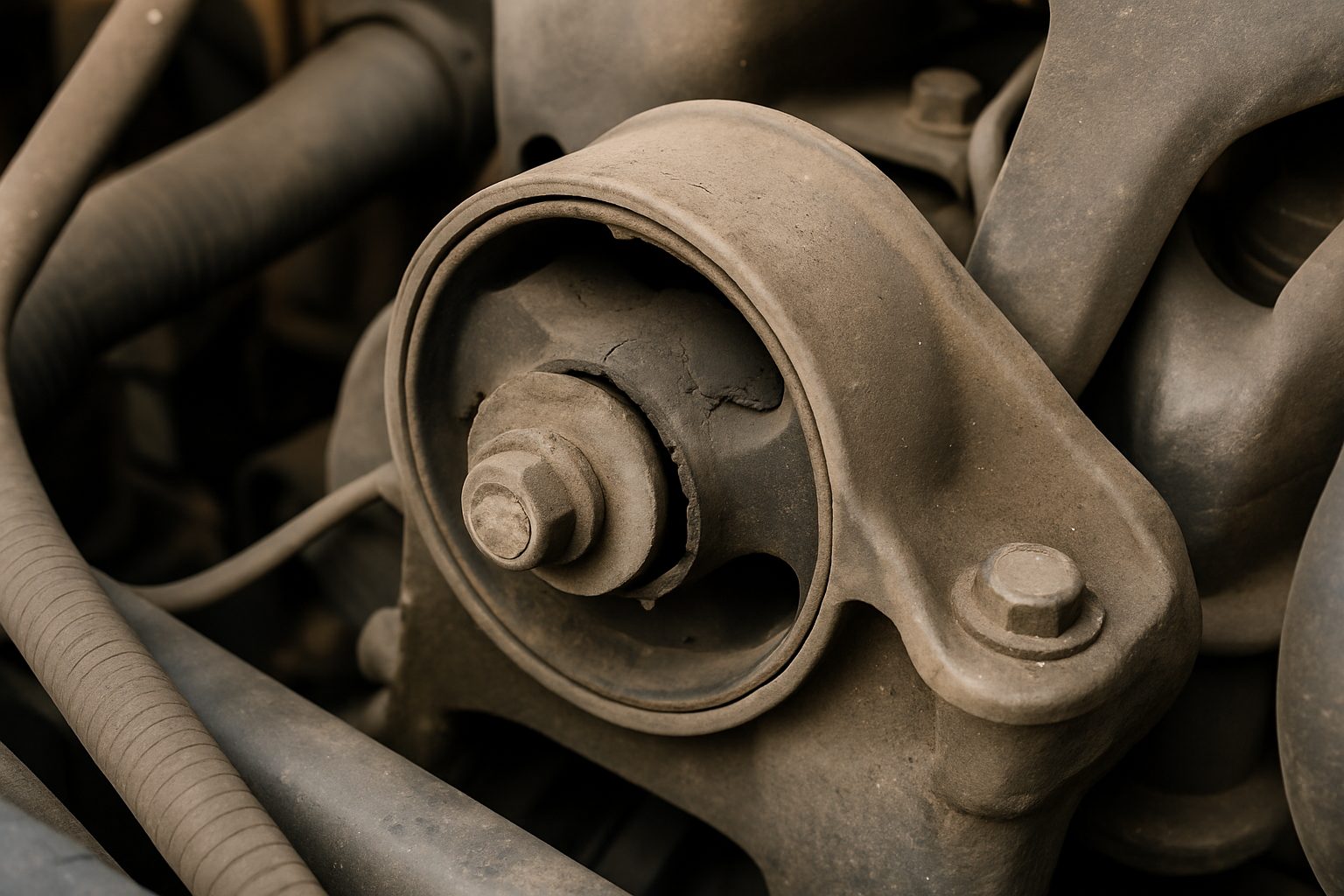
Some worn mounts show cracks, separation, collapsed rubber, or fluid leakage when they are used with hydraulic damping. Access may be limited, so visual inspection alone is not always enough.
We compare mount condition with the customer’s symptoms and engine movement. Q50 configurations differ across the model line, so we verify the exact engine and drivetrain before choosing replacement parts or procedures.
Why Delaying Mount Repair May Cause More Problems
Excessive engine movement may place added strain on hoses, wiring, exhaust connections, and other nearby components. It may also make normal shifting or acceleration feel harsher than it should.
Replacing a confirmed failed mount helps restore proper engine support and reduce vibration transferred into the cabin. After installation, we recheck engine movement, listen for remaining noises, and verify the original complaint has improved.
Schedule Infiniti Q50 Vibration Diagnosis
If your Infiniti Q50 shakes at idle, clunks during acceleration, or feels rougher than normal near Willow Glen, contact Driven Auto Care of San Jose, CA. We will inspect the engine and drivetrain, explain our findings, and recommend repair based on the confirmed source.