REVIEWS
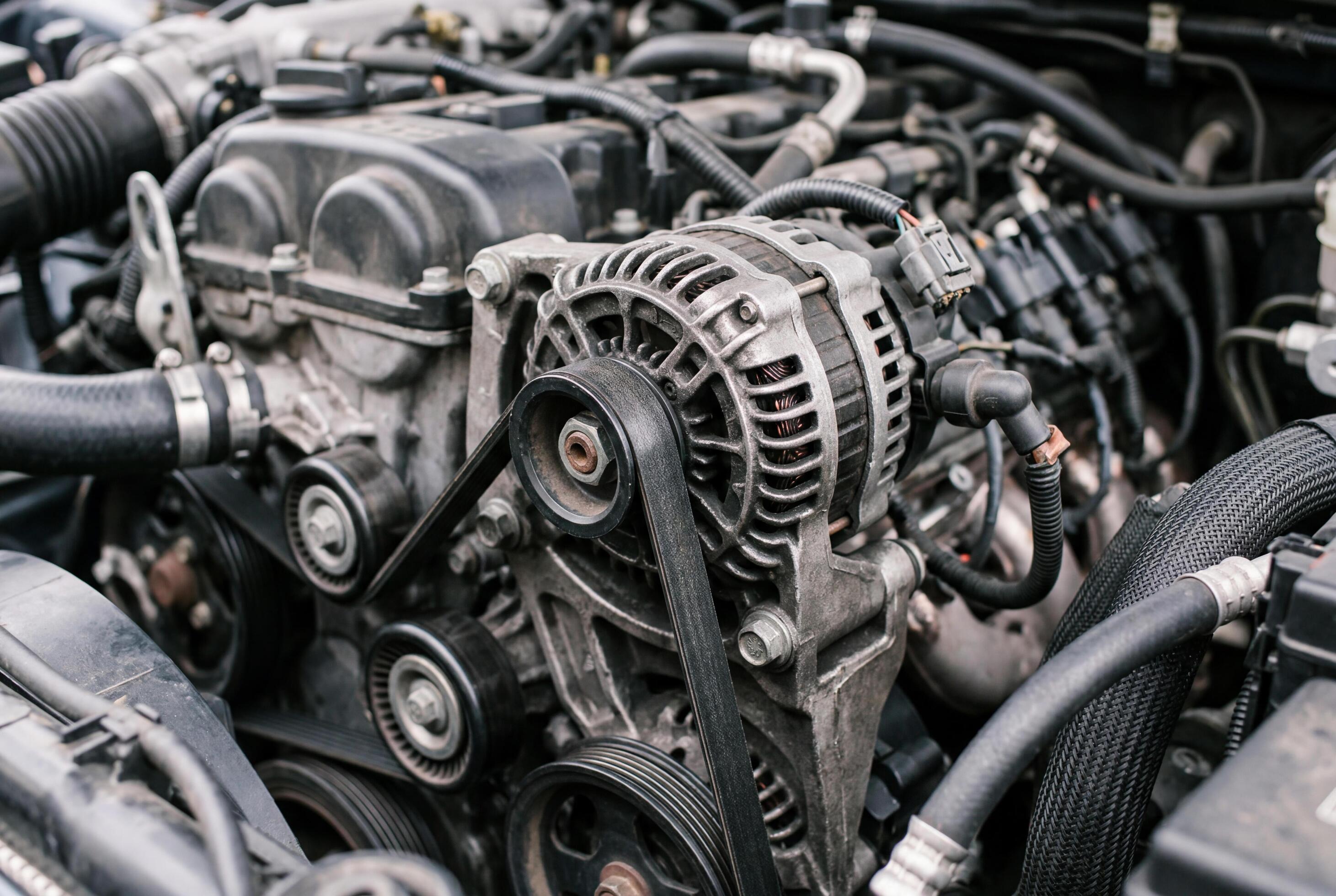
A Ford Mustang’s accessory drive belt works constantly while the engine runs. It transfers crankshaft rotation to belt-driven components, so a damaged or slipping belt can quickly cause noise, warning lights, charging issues, or loss of air conditioning. If the belt breaks completely, the Mustang may need to stop immediately, depending on which accessories it uses.
At Driven Auto Care of San Jose, CA, we help Sunnyvale drivers diagnose belt and accessory-drive problems from our San Jose shop. Our service menu includes serpentine belt replacement, charging system diagnosis, alternator replacement, AC compressor replacement, engine diagnosis, and routine maintenance. We inspect the entire drive system because installing a new belt will not fix a seized pulley or a failing tensioner.
Listen for Squealing, Chirping, or Slapping
A worn or slipping belt may squeal during startup or acceleration. Chirping may point toward pulley misalignment, while a slapping sound may develop when the belt loses tension. Noise alone does not identify the failed component, though. A worn tensioner, idler pulley, alternator bearing, AC compressor pulley, or contaminated belt may sound similar.
We listen with the engine cold and warm, observe belt tracking, and inspect each accessible pulley. Reproducing the noise before removing parts helps us avoid replacing a belt while leaving the real cause behind.
Inspect Cracks, Fraying, and Contamination
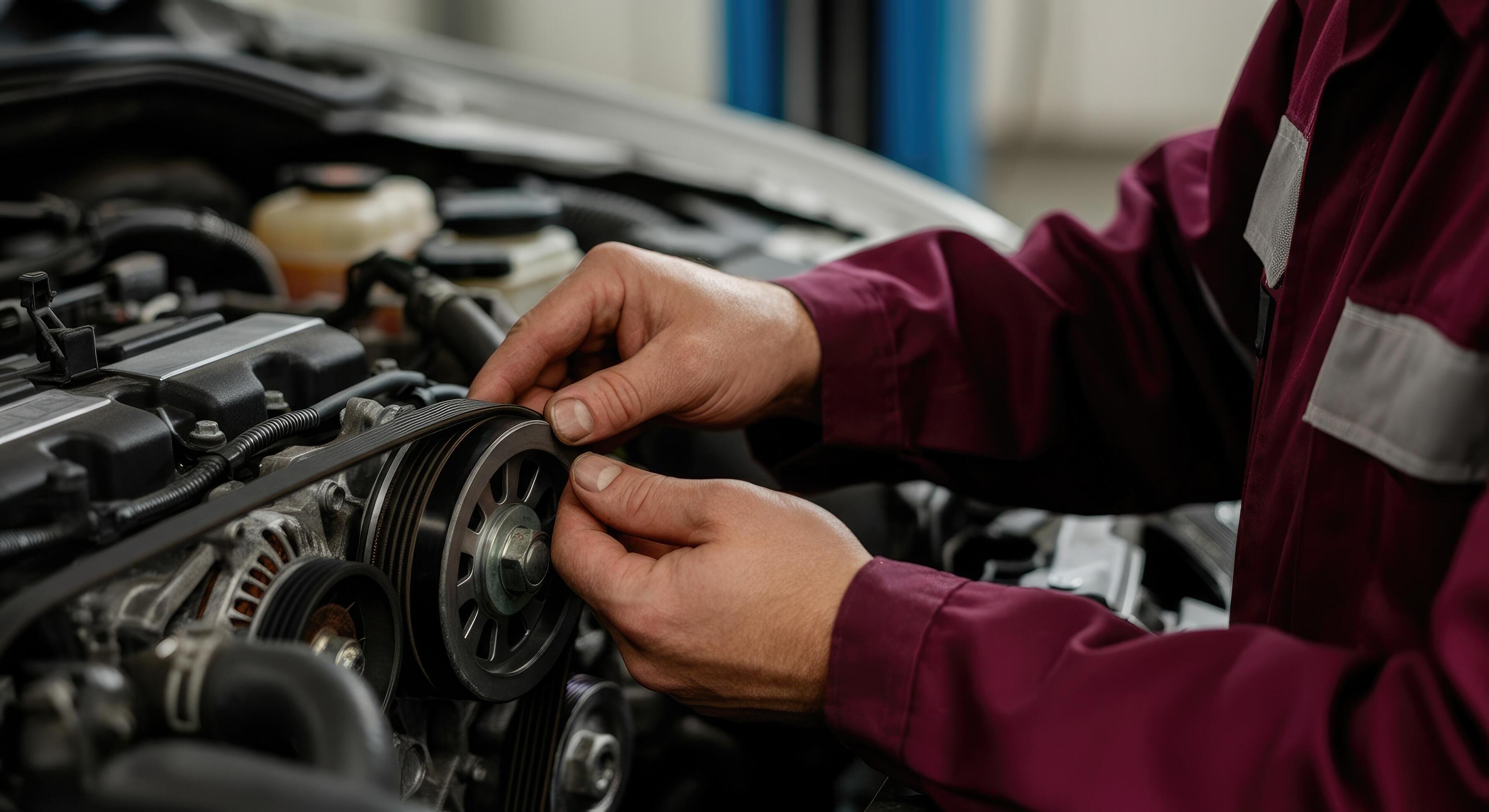
Visible belt damage deserves attention. Frayed edges may suggest misalignment. Missing ribs, cracking, glazing, or damaged grooves may indicate age, heat, or pulley trouble. Engine oil or coolant on the belt may also shorten its service life and cause slipping.
If contamination is present, we look for the leak before replacing the belt. A valve-cover leak, coolant leak, or other fluid source should be repaired so the replacement belt stays clean and grips correctly.
Watch for Charging and Accessory Problems
The belt may drive the alternator, air conditioning compressor, and other accessories depending on Mustang model year and engine. A slipping or broken belt may therefore appear as more than a simple noise complaint. A battery warning, weak charging, sudden AC loss, or rising engine temperature may accompany accessory-drive failure on applicable configurations.
If warning lights appear or the engine temperature begins to climb, pull over safely and arrange service. Continuing to drive after a major belt failure may create additional problems.
Follow the Correct Mustang Maintenance Schedule
Ford’s accessory-belt maintenance schedule varies by model year. For example, the 2026 Mustang owner’s manual calls for inspecting the accessory drive belt at 100,000 miles and replacing it at 150,000 miles. Earlier Mustang schedules may use different inspection points, so we recommend following the manual for the specific vehicle rather than relying on one universal interval.
Mileage is not the only consideration. A belt with visible damage, abnormal noise, contamination, or poor tension may need attention before its scheduled replacement point.
What Accessory Drive Repair Includes
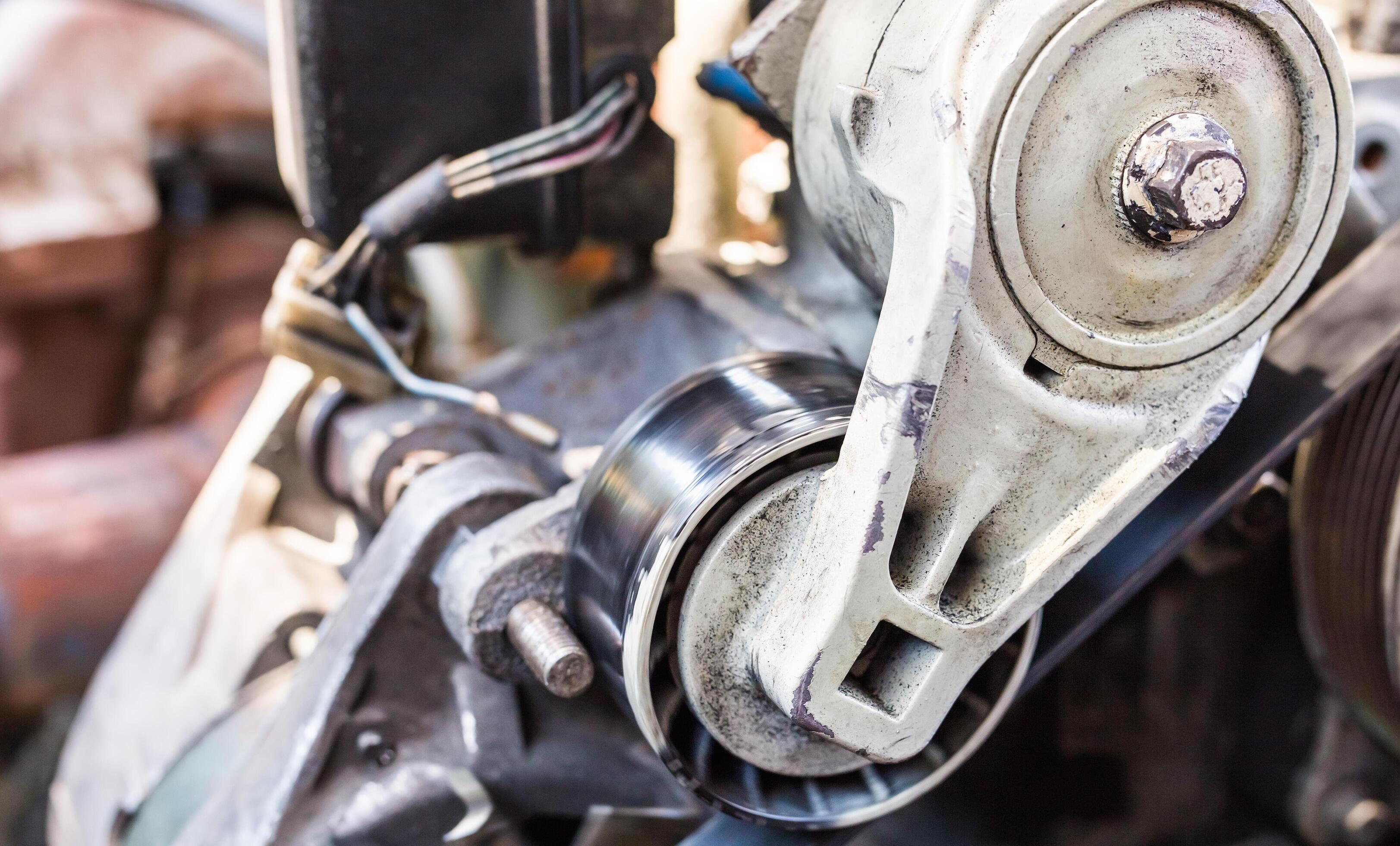
We inspect the belt, automatic tensioner, idler pulleys, driven accessories, alignment, and nearby leaks. If the belt failed because another component seized or developed excessive play, we address the cause before fitting a replacement.
After repair, we verify belt routing and tension, start the engine, watch belt tracking, and confirm the related accessories operate normally. This final check helps reduce the chance of another failure shortly after service.
Schedule Ford Mustang Belt Service
If your Ford Mustang squeals, chirps, shows visible belt damage, or develops charging or accessory problems near Sunnyvale, contact Driven Auto Care of San Jose, CA. We will inspect the accessory drive, explain our findings, and recommend the repair needed for dependable operation.