REVIEWS
An Audi Q7 check engine light may appear without an obvious change in performance, or it may arrive with rough idle, shaking, reduced power, hard starting, or unusual fuel use. The light only confirms the engine control system detected a fault. It does not identify the failed part by itself.
At Driven Auto Care of San Jose, CA, we help Sunnyvale drivers move from warning light to verified repair. Our team provides engine diagnosis, engine repair, sensor replacement, electrical troubleshooting, and digital vehicle inspections. The shop also serves Sunnyvale and the wider South Bay from its San Jose location.
A Steady Light Still Needs Diagnosis
A steady check engine light often means the Q7 remains drivable, but waiting may allow a small problem to worsen. Possible causes include an intake leak, an oxygen sensor fault, an evaporative emissions problem, ignition trouble, a fuel delivery issue, or a software-related fault. Audi service bulletins show similar warning lights may come from very different sources, including tank ventilation sensor faults and engine control software.
Start by checking whether the fuel cap is secure, then watch for rough operation, fuel odor, smoke, overheating, or reduced power. Do not erase codes before service. Clearing them may remove freeze-frame information showing engine conditions when the fault appeared.
Flashing Light, Shaking, or Power Loss
A flashing light paired with shaking or hesitation may indicate an active misfire. Reduce speed, avoid hard acceleration, and arrange service promptly. Continued driving with a severe misfire may increase heat in the exhaust system and create further damage.
Audi issued guidance for certain 2020–2021 Q7 models involving illuminated malfunction lights and cylinder misfire codes. The repair path included checking applicable software information rather than automatically replacing coils, spark plugs, or injectors. Model year, engine type, fault codes, and test results all matter.
Air Leaks and Crankcase Ventilation Trouble
Whistling noises, unstable idle, or a lean-running condition may point toward an intake or crankcase ventilation leak. Audi guidance for some 2011–2019 Q7 models with 3.0-liter engines links a warning light and code P052E00 with a cracked crankcase breather connection.
This example explains why code reading is only the first step. The same symptom may come from a hose, valve, seal, sensor, wiring fault, or control issue. A visual inspection, smoke test, and live-data review help narrow the cause.
What an Engine Diagnostic Test Includes
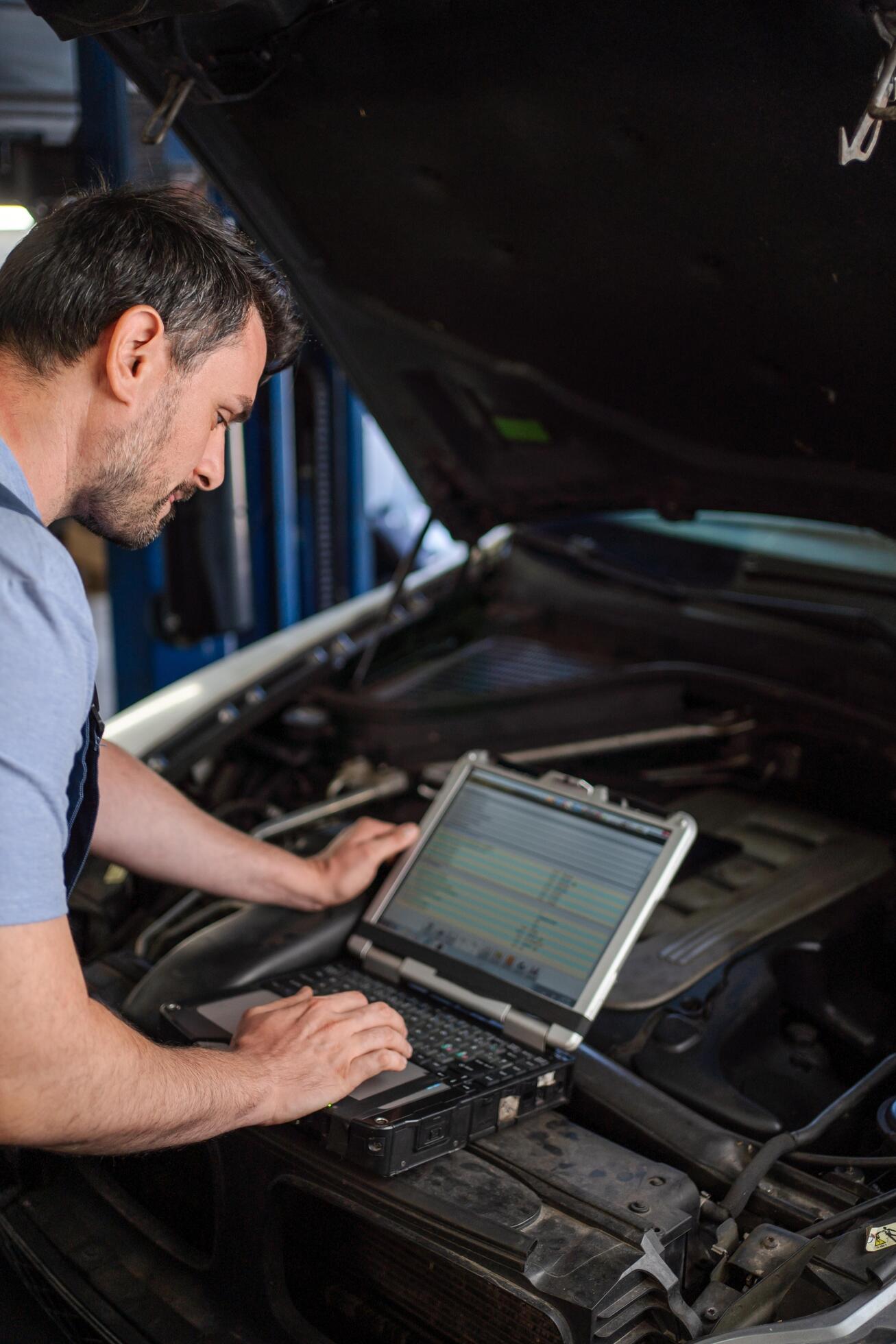
We begin by asking when the light appeared and how the Q7 behaves. Next, we scan all relevant modules, record stored and pending codes, review freeze-frame data, and compare live sensor readings. Depending on the results, testing may include ignition checks, fuel pressure testing, smoke testing, wiring inspection, battery and charging evaluation, or mechanical engine tests.
Audi technical information also shows incorrect fault descriptions may appear during guided diagnosis on certain 2022–2023 Q7 models. Accurate testing requires vehicle-specific procedures, current service information, and careful interpretation.
Repair the Cause, Not the Code
A fault code identifies a circuit or operating condition, not a guaranteed replacement part. We confirm the failure before recommending coils, sensors, valves, wiring repairs, software work, or internal engine service. After repairs, we clear relevant faults, verify live data, and road-test the vehicle when appropriate.
Schedule Audi Q7 Diagnostic Service
If your Audi Q7 has a steady or flashing check engine light near Sunnyvale, contact Driven Auto Care of San Jose, CA. Prompt testing will help protect performance, prevent unnecessary parts replacement, and clarify the repair needed.