REVIEWS
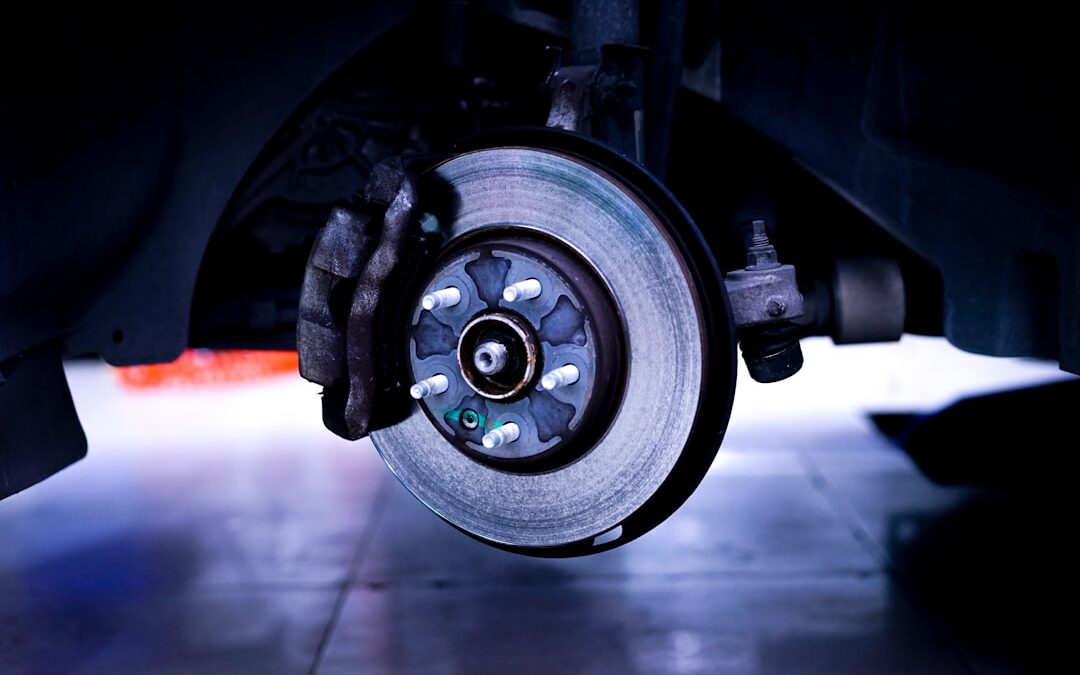
You’re easing down a parking-garage ramp, the red brake warning lit on the cluster the way it has for two weeks, and a low metallic grind climbs every time you slow. No squeal came ahead of it, which is no accident on this SUV. That sequence is the E70 doing what its engineering predicts. The 2012 BMW X5 carries no mechanical squealer tab pressed into the pad material, so the only advance notice this SUV gives you is electronic. Once that window closes, the backing plate is already cutting the rotor. At Driven Auto Care of San Jose, we see this pattern on X5 owners across San Jose, CA, where the grind can trace back to the front pads, the rear parking-brake shoes, or both.
What the Two-Stage Sensor Is Telling You
The wear sensor embedded in the pad trips at two calibrated stages. The first throws a yellow advisory near half pad life, a heads-up you can plan a service around. The second throws red with little friction material left. With no squealer tab anywhere in the circuit, a red lamp that gets ignored long enough lets the backing plate meet the rotor face, and that contact is the grind you hear. We replace the sensor with every pad set because its tip crumbles once it wears to the second stage, and the warning module won’t reset against a damaged tip.
The Drum-in-Hat Parking Brake Most Shops Never Open
Inside the hat of each rear rotor sits a small set of shoes driven by an electric module, the parking brake hiding inside what reads as a plain disc. Seized shoes grind, delaminated lining grinds, and a failing module can drag the shoes against the drum with a noise that mimics a worn pad. The tell shows up at low speed, where it hangs on even after the front and rear service brakes have been freshly replaced. Plenty of shops finish a rear pad-and-rotor job on this platform without ever pulling the rotor to open that drum.
The Stability-Control Faults That Surface Days Later
Metal debris shed by a grinding backing plate does not stay in one corner of the car. Fragments work into the wheel housing and collect on the wheel-speed sensor tip, the same tip ABS and DSC stability control read for accurate speed data. The fault does not throw right away; the debris builds across a string of brake applications, and the warning lamp lights a day or two after the grinding started. Chasing that stability-control code without first checking the sensor tip for brake debris ends in a swapped module that fixed nothing.
Sorted Front to Rear, Sensor Included
Call us at (408) 295-3786 and we start by separating front from rear and braking noise from parking-brake noise before a single part comes apart. That order keeps a quick fix from hiding a slower one. We scan the stability-control and parking-brake modules, then measure rotor thickness against the minimum stamped on the rotor, then pull each rear rotor to inspect the drum-in-hat shoes. Scored rotors get replaced rather than resurfaced, because an E70 rotor worn past spec can’t dump heat fast enough under repeated hard braking. Fresh pads and rotors then run a bedding-in procedure that lays an even transfer film of friction material across the rotor face. We tell you what the scan found, what the rotors measured, and whether those drum-in-hat shoes have ever been touched.