REVIEWS
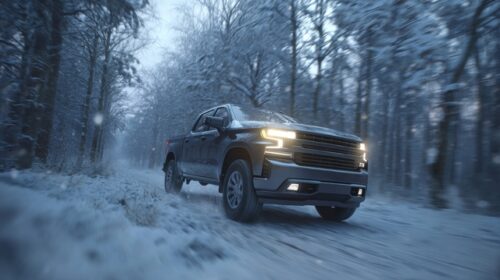
A GMC Sierra 1500 idling in a driveway and a GMC Sierra 1500 pulling four thousand pounds up a steep grade carry two completely different cooling system workloads, and the components that handle the weekend commute without complaint come under stress; the odometer never records when the trailer hitches up. Driven Auto Care of San Jose serves Sunnyvale GMC owners from our San Jose shop, and the question of why trucks develop coolant leaks after heavy towing has an answer in three parts: what the system does before the trailer, what changes during the pull, and what the heat leaves behind afterward.
Before The Trailer: The Cooling System Is Designed For Steady Commuter Loads
A 2007–2013 GMT900 Sierra with the Gen IV 5.3L V8 runs a cooling system calibrated to handle normal commuter loads on Bay Area freeways. The water pump circulates coolant at a steady rate matched to engine speed, the radiator sheds heat to passing air at highway velocity, and the thermostat maintains operating temperature within a narrow band the designers chose for emissions compliance and fuel economy. Every component in this system operates inside its designed envelope under normal driving. The radiator end tanks, the hoses, the water pump seal, and the thermostat housing all live comfortably inside their pressure and temperature ranges on a Sunnyvale commute up 101.
During The Pull: Heat Accumulates Faster Than The Radiator Can Shed It
Hooking up a trailer and pulling a grade changes all of those numbers at once. Engine load rises, combustion temperatures climb, and the cooling system works harder to keep the block and heads inside their operating range. Under a steady highway cruise, the radiator has time to dump heat to the airflow across its fins, but under a grade climb at lower road speed, the airflow drops and the heat load rises at the same moment. System pressure climbs with temperature because the coolant expands inside a sealed loop, and every component in the cooling system feels that pressure cycle hundreds of times across a two-weekend period. The plastic radiator end tanks flex at their crimped seams, the thermostat housing gasket compresses and releases with each cycle, and the water pump shaft seal works through its design life faster than the miles suggest.
After The Weekend: The Damage Shows Up On The Driveway Monday Morning
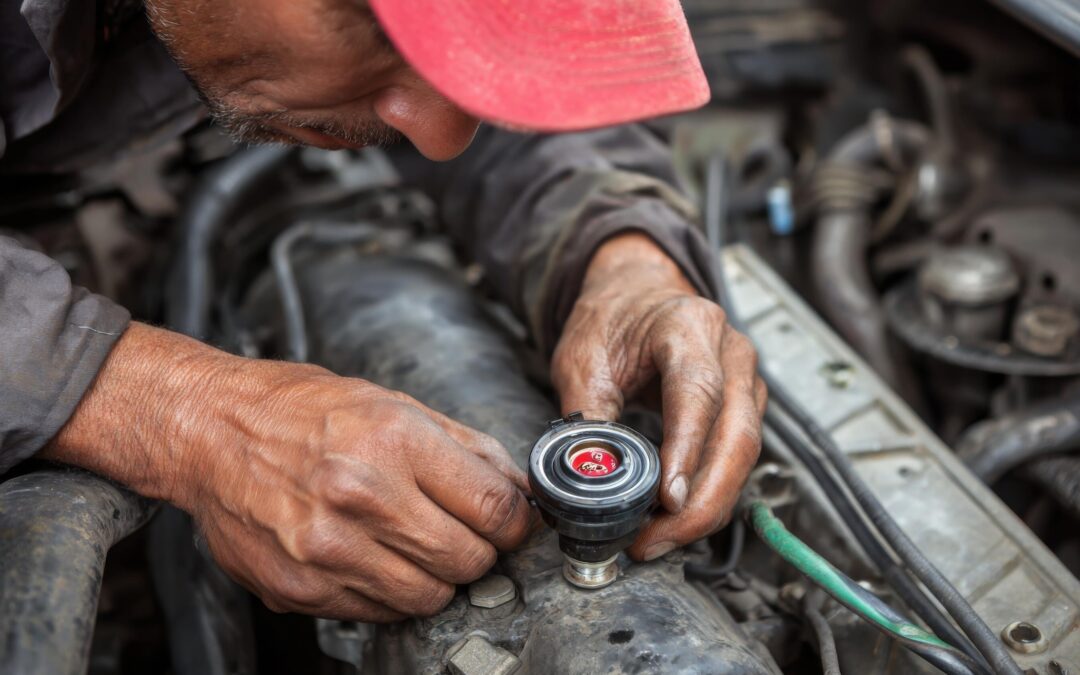
Monday morning, after the tow, reveals what the heat left behind. A GMT900 Sierra that pulled a boat up the grade and back might show a damp spot under the water pump weep hole where the seal finally gave up, or a seepage trace at the radiator end tank seam where pressure cycling finished the crack that started months ago. K2XX Sierra models from 2014 through 2018 add thermostat housing weeps to the watch list, where the gasket surface between the housing and the engine lets coolant escape in small amounts that owners find during a cold inspection. None of these failures was caused by the two weekends alone. Every one of them was accelerated by the tow-load stress pattern.
The Insider Beat: The Radiator Houses The Transmission Cooler
Here is what most shops miss on a GMC tow-damaged cooling system. The radiator on these Sierra generations houses the automatic transmission fluid cooler inside one of the end tanks, which means a failed cooler tank can cross-contaminate coolant and transmission fluid across the internal separator. Pink sludge on the transmission dipstick traces back to the radiator every single time, and the fix is a radiator replacement plus a full transmission fluid service. An inspection that skips the transmission dipstick check during a coolant diagnosis leaves the full problem unresolved for the customer and misses the part of the diagnosis that matters most.
One Appointment, Four Inspection Points, And A Road Test Under Simulated Load
Call Driven Auto Care of San Jose at (408) 295-3786 to book a tow-damage cooling inspection that checks the water pump weep hole, the radiator end tanks, the thermostat housing, and the transmission fluid condition in a single visit. We follow the inspection with a road test under simulated load to confirm the system holds pressure and temperature inside the designed range before we hand the keys back, because a tow truck earns an inspection that reflects the work it performs.