REVIEWS
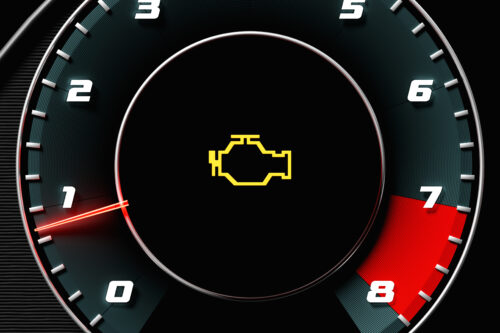
A check engine light comes on, and you want it gone. The temptation is to find the cheapest fix and move on with your day. Santa Clara Toyota owners who’ve tried that approach often end up back at the parts counter within weeks, buying another sensor or another part that didn’t solve the problem. The light returns because nobody identified what actually failed.
What Does the Code Actually Mean?
A fault code identifies a circuit or system where the car’s computer detected abnormal readings. The code doesn’t name the broken part. P0420 means catalyst system efficiency below threshold, and most people assume they need a new catalytic converter. The actual cause might be an exhaust leak upstream, a failing front oxygen sensor sending bad data, or a converter that’s genuinely worn out. Each possibility requires different testing to confirm.
P0171 and P0174 indicate the engine is running lean on bank one or bank two. Lean means too much air or too little fuel relative to what the computer expects. A cracked intake boot between the mass airflow sensor and throttle body lets unmetered air enter the engine. A stuck-open PCV valve does the same thing. A dirty MAF sensor underreports airflow and causes the computer to deliver insufficient fuel. We use smoke testing to find vacuum leaks and MAF sensor cleaning or replacement to restore accurate air measurement.
Why Does the Same Code Keep Coming Back?
Replacing the part named in the code description doesn’t address the underlying condition that triggered the fault. P0441 indicates improper purge flow in the EVAP system, and the typical response is a new purge valve. If the real problem is a cracked charcoal canister or a pinched vent hose, the new valve won’t fix anything. We smoke test the entire EVAP system to find where vapor escapes before recommending component replacement.
Misfire codes like P0301 through P0304 point to specific cylinders, and the easy answer is new spark plugs and ignition coils. Misfires also result from fuel injector faults, low compression from worn piston rings, or vacuum leaks that affect one cylinder more than others. We swap coils between cylinders to see if the misfire follows the coil or stays with the cylinder. That simple test eliminates guesswork and identifies whether the ignition system or the engine itself is at fault.
What Information Are You Missing?
Freeze-frame data captures engine conditions at the exact moment the fault occurred. RPM, vehicle speed, coolant temperature, and fuel trim values reveal whether the problem happens at idle, under load, or during cold starts. A misfire that only occurs below 2,000 RPM points to different causes than one that appears during highway acceleration. We read freeze-frame data before performing any tests because that snapshot directs our diagnostic path.
Mode $06 data shows how close your Toyota’s systems are to their failure thresholds. Catalyst efficiency, oxygen sensor response time, and misfire counts all have pass/fail boundaries stored in the computer. A system can pass today and fail next month if the readings are trending toward the limit. We check Mode $06 to catch developing problems before they trigger a new code.
Get Answers in San Jose
Driven Auto Care serves Santa Clara residents from our San Jose location and specializes in Toyota diagnostics. We read the code, analyze the data, test the system, and identify the failure before recommending any repair. Call (408) 295-3786 when your check engine light comes on and you want the problem solved correctly the first time.