REVIEWS

If your 2016 Ford F-150 has a check engine light, reduced power, poor fuel economy, or an unusual exhaust odor, the catalytic converter may be failing. However, converter failure often develops because another engine problem sends excessive heat, unburned fuel, or contaminants into the exhaust. Replacing the converter without finding the cause may lead to another expensive failure.
At Driven Auto Care of Fremont, CA, we serve Sunol drivers from our Fremont shop. Our exhaust and emissions services include catalytic converter replacement, diagnostics for emissions failures, oxygen sensor replacement, exhaust repair, and engine diagnosis.
A Flashing Check Engine Light Is Urgent
Ford’s 2016 F-150 owner’s manual gives a clear warning about a flashing Service Engine Soon light. Ford says a flashing light indicates engine misfire, and the resulting high exhaust temperatures may damage the catalytic converter.
If your truck is misfiring, shaking, stumbling, or flashing the warning light, avoid heavy acceleration and schedule service promptly. Installing a converter before correcting the misfire leaves the new part exposed to the same damaging conditions.
Misfires Can Overheat the Converter
A catalytic converter works in the exhaust stream, where it helps process harmful emissions. When an engine misfires, some fuel may pass through the cylinder without burning normally. Unburned fuel can burn in the exhaust, pushing converter temperatures far beyond normal operating conditions.
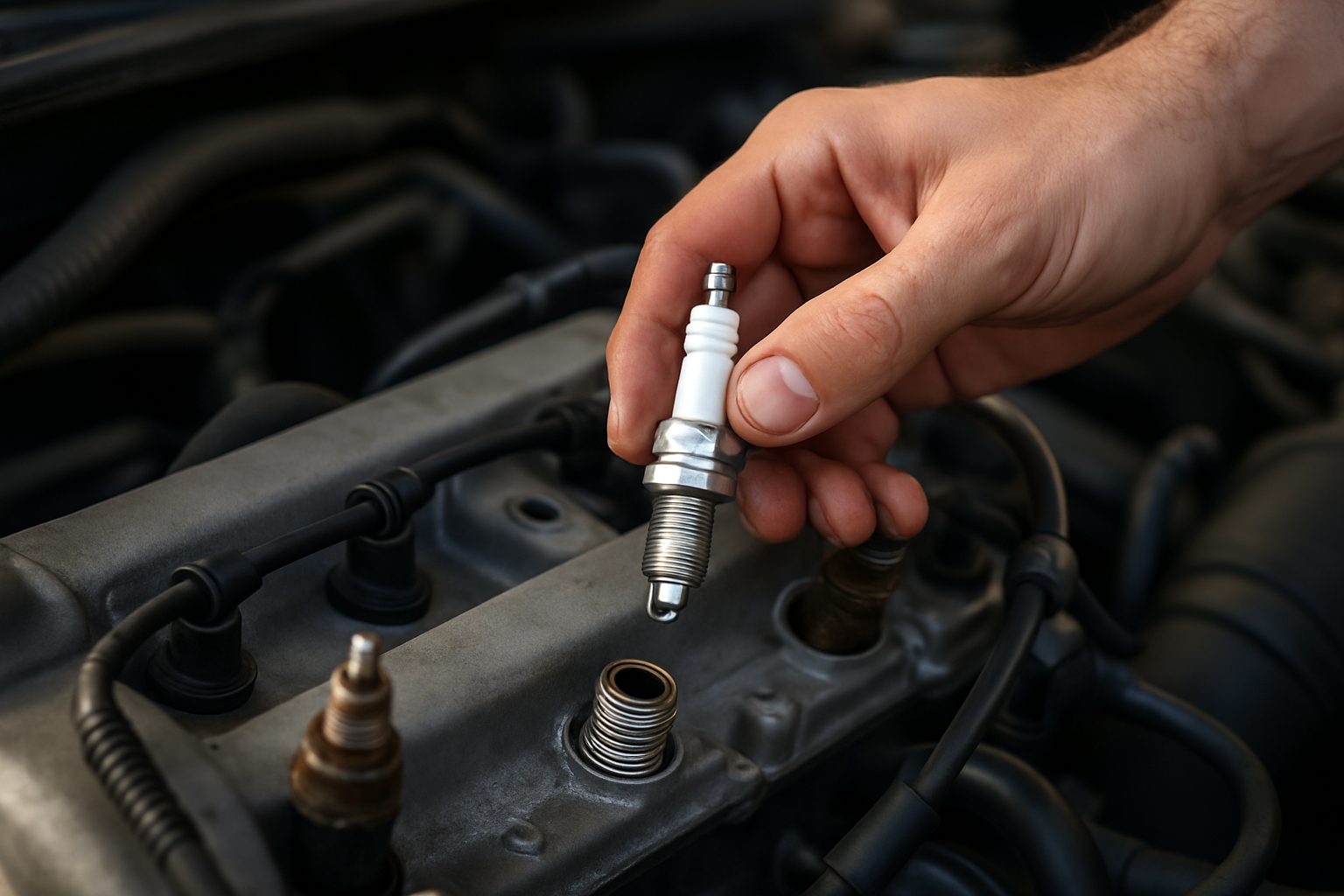
Ignition-coil problems, worn spark plugs, injector faults, or other combustion issues may contribute to a misfire. We scan for stored codes, review misfire data, and test the affected system before blaming the converter alone.
Fuel and Air Problems Can Create Similar Trouble
Ford’s owner guidance notes that poor fuel quality or water contamination may cause the engine to misfire or run poorly. Airflow, fuel-pressure, injector, or sensor problems may also upset combustion.
These faults may trigger a check engine light and poor performance even when the converter remains usable. A catalytic-efficiency code gives us a starting point, but it does not replace testing.
Some 2.7L F-150s Had a Ford Converter Bulletin.
Ford issued Technical Service Bulletin 16-0011 for certain 2015-2016 F-150 trucks equipped with the 2.7-liter GTDI engine and built on or before Dec. 18, 2015. The bulletin addresses an illuminated malfunction indicator lamp with code P0420. Ford’s repair procedure calls for replacing the right-side catalytic converter and updating PCM calibration when the bulletin applies.
Not every 2016 F-150 qualifies. We first confirm engine size, build date, stored codes, and current software before using a model-specific bulletin to guide repairs.
Power Loss and Exhaust Odors Need Inspection
Ford says a Service Engine Soon light, strange odors, smoke, or loss of engine power may indicate an emissions-control problem. A restricted or damaged converter may reduce exhaust flow and affect acceleration, but other engine faults may produce the same symptoms.
We inspect the exhaust, scan the engine computer, review oxygen-sensor data, and check for conditions that could damage the converter.
Replacing the Converter Is Only Part of the Repair
If testing confirms converter failure, replacement may be necessary. The bigger question is why the converter failed. We look for active misfires, fuel-control problems, oil or coolant contamination, sensor faults, and exhaust leaks before installing a replacement.
Driven Auto Care of Fremont, CA offers catalytic converter replacement, emissions diagnostics, oxygen-sensor service, and exhaust repair from our Fremont location.
Schedule Ford Exhaust Diagnosis Near Sunol
If your 2016 Ford F-150 has a check engine light, flashing warning light, reduced power, rough running, or unusual exhaust odors, schedule an inspection. We will identify the source, determine whether the converter is actually failing, and correct the root cause before recommending a replacement.