REVIEWS

You open the hood of your Tiguan in a Dublin driveway and find a pink, chalky crust of dried coolant low on the engine, just under the intake manifold. On the 2.0T engine in the 2018 and later Tiguan, the water pump and the thermostat housing sit together in that spot as two plastic parts bolted together, and a slow leak there dries on the hot engine before it ever drips. At Driven Auto Care of San Ramon, we first find which of the two is leaking.
What the Pink Crust and the Low Coolant Light Mean
Volkswagen coolant is pink, and it leaves a pink or white crust where it has seeped out and dried. On this engine, the crust usually collects at the seams: where the thermostat housing meets the engine block, or where the housing joins the pump body. A leak this slow can take weeks to drop the level, so the low coolant light is usually the first thing you see. A sweet smell after a drive comes from the same coolant cooking off the hot engine. If the temperature gauge climbs past its normal spot or the red coolant warning comes on while you drive, pull off where it's safe and shut it down.
Two Parts Sharing One Spot on the Engine
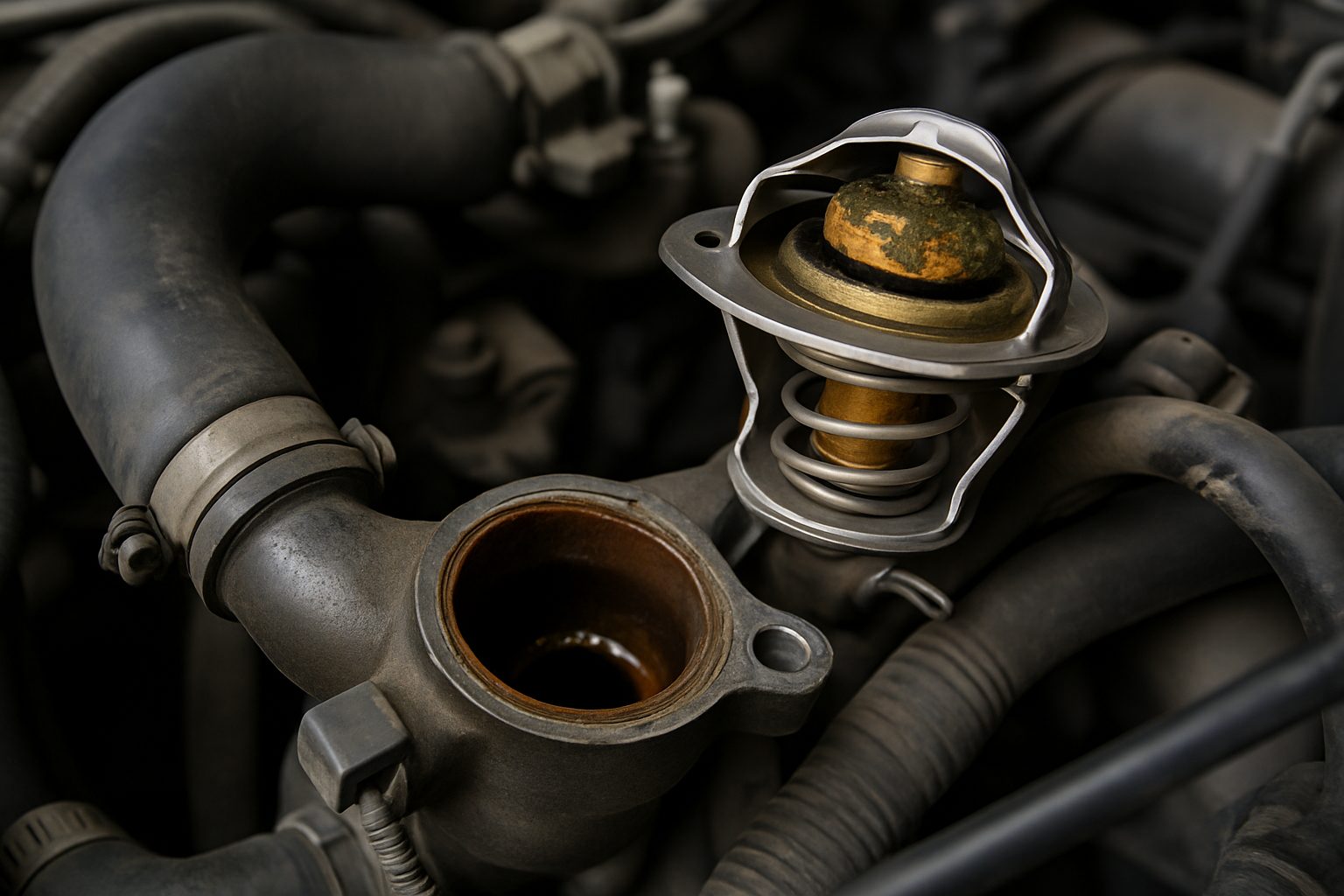
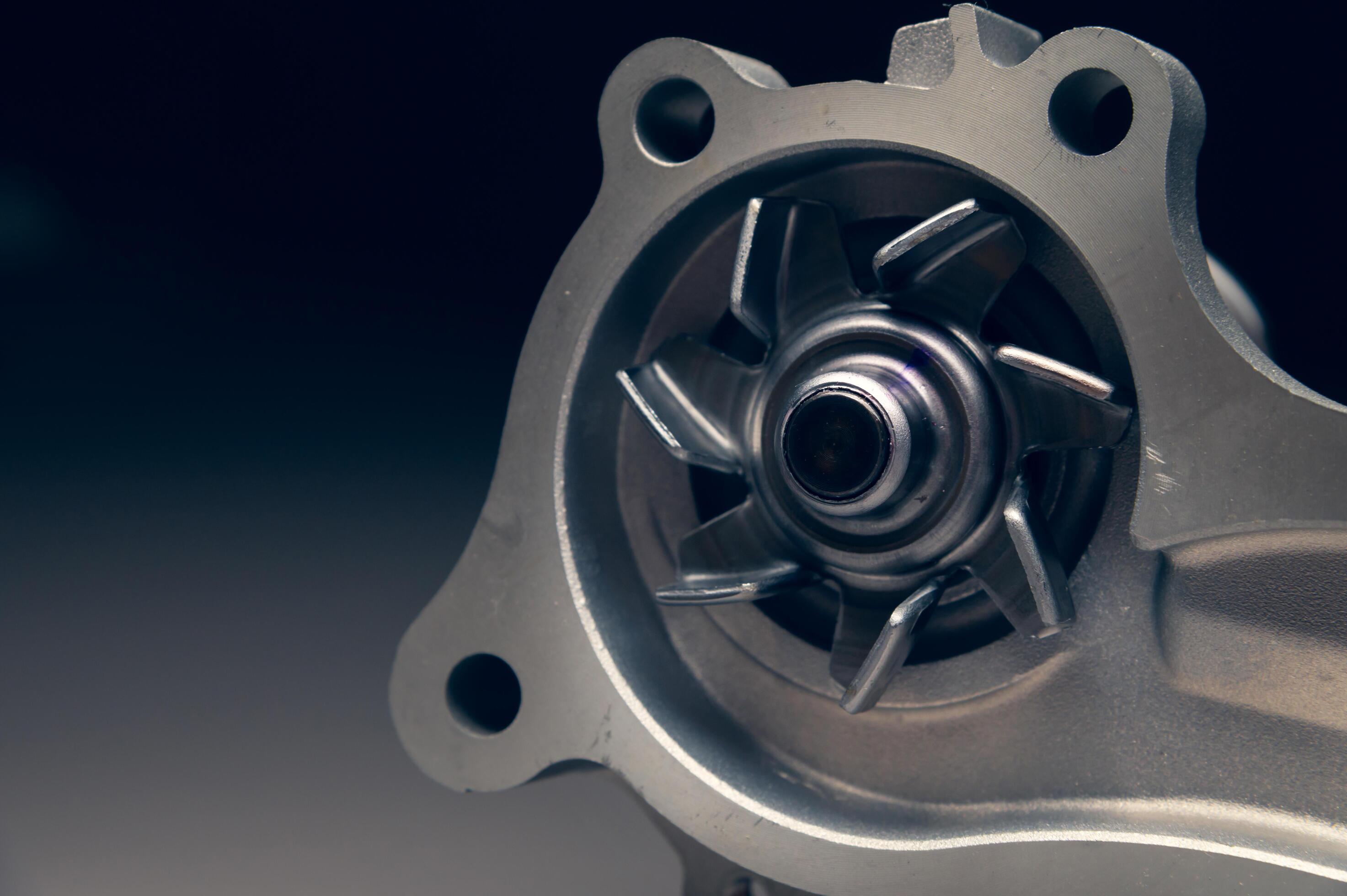
The water pump moves coolant through the engine, and a small belt off the engine's balance shaft turns it. The thermostat housing bolts to the pump and holds the part that controls engine temperature. On this engine, an electric motor turns a pair of rotary valves inside the housing to open and close coolant flow, which does the job a simple wax thermostat does on older engines.
Because the two parts sit together, a wet seam can come from either one. The pump has a small weep hole that shows coolant when its internal seal has started to leak. The housing's weak spots are its own gaskets and seams. On your Tiguan, we replace the part that leaks with new seals, and we replace both when both leak.
How We Find Which Half Is Leaking
We let the engine cool first, then clean off the old crust so fresh coolant stands out. Then we pressurize the cooling system with a hand pump to the pressure it runs at when hot. That pressure pushes coolant out of the weak spot while the engine sits still, and we watch the gauge for a drop. A wet weep hole points to the pump, and a wet housing seam means the thermostat housing is leaking. We also connect a scan tool and read the stored fault codes. A code for low coolant flow, P00B7, can come from the pump, from the rotary valves in the housing, or from a low coolant level, so we check the level and the valve motor before naming a part.
The Cold Morning Sign of a Thermostat Stuck Open
Not every thermostat problem leaves a wet spot. When the valves in the housing stay open, coolant keeps flowing through the radiator as soon as you start the engine. On a cool morning, the temperature gauge takes a long time to rise, and the heater blows lukewarm air, especially on the freeway. The check engine light can come on with code P0128, which means the engine stayed below the temperature the thermostat should hold. The same code can come from the coolant temperature sensor or its wiring, so we watch the live temperature reading during a warm-up before we replace anything.
What the Repair Involves
The pump and thermostat housing sit under the intake manifold, so the intake comes off to reach them. When the pump comes off, it gets a new drive belt as well. Then we refill the system under vacuum so no air pockets stay trapped in the engine. A final warm-up confirms the engine reaches its working temperature and the heater blows hot.
Call Driven Auto Care of San Ramon at (925) 830-4701 and describe the crust, the low coolant light or the slow warm-up you've noticed on your Tiguan. We'll pressurize the cooling system with a hand pump, find the part that leaks, and replace it. Your engine then warms up on time and holds its temperature.