REVIEWS
The air from the vents goes warm at a long red light in Danville, then comes back cold once traffic moves again. You've probably filed that under air conditioning. Warm air at a stop can point to weak airflow through the air-conditioning condenser, and that same fan also moves air through the radiator on many 3 Series. At Driven Auto Care of San Ramon we want to know what the air does once you're moving. At a red light your engine and your air conditioning are working with the same air.
What Changes When You Stop at a Light?
Out on the road, air gets forced through the front of the car whether the fan runs or not. A system with little margin left still cools fine on the drive to work. Then you stop at a light. On many 3 Series, everything behind the grille then depends on one electric fan. If airflow is the problem, the air turns cold within a minute or two of moving, then goes warm at the next long light. If it stays warm at road speed too, we test the air conditioning system directly.
The Stack Behind the Grille
On many 3 Series the air conditioning condenser sits directly in front of the radiator. The two stack front to back, with one electric fan behind both. That fan pulls outside air through the condenser first and the radiator second. In Danville stop-and-go traffic with the air conditioning on, both systems draw from the same column of air. You notice the warm cabin first. An engine-temperature warning may appear later, after the airflow problem has already made the cabin warmer.
Road Debris Packs in Front of the Radiator
That stack sits at the very front of the car, in the open path of road debris. Leaves, seed pods and grit collect in the gap between the condenser and the radiator, and years of it packs into a mat. The car still cools normally at speed. At a stop the fan has to pull through that mat, and less air reaches the radiator behind it. We look at that face early, because debris and fluid condition make the same complaint from the driver's seat.
Which Parts Can Cause the Same Pattern?
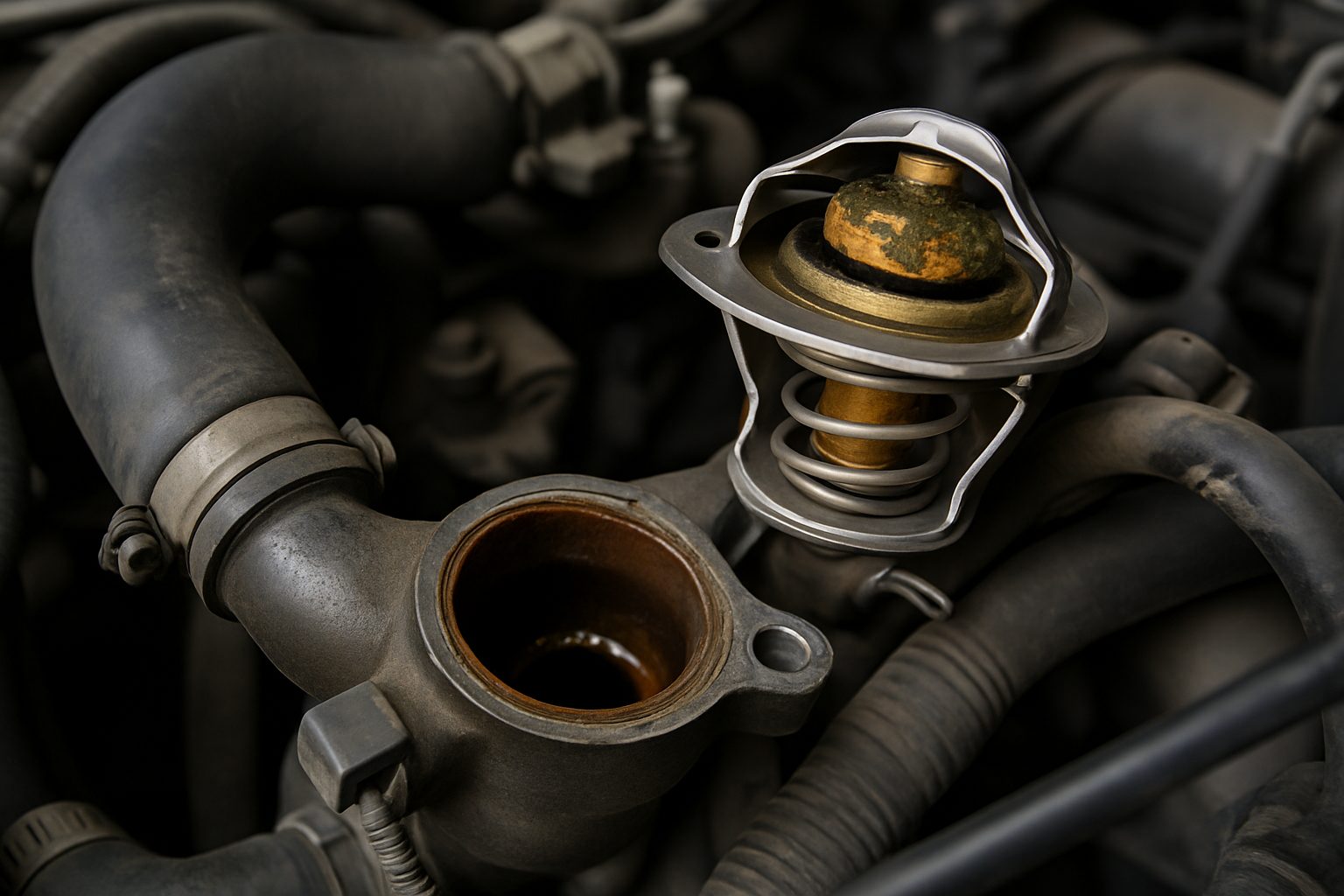
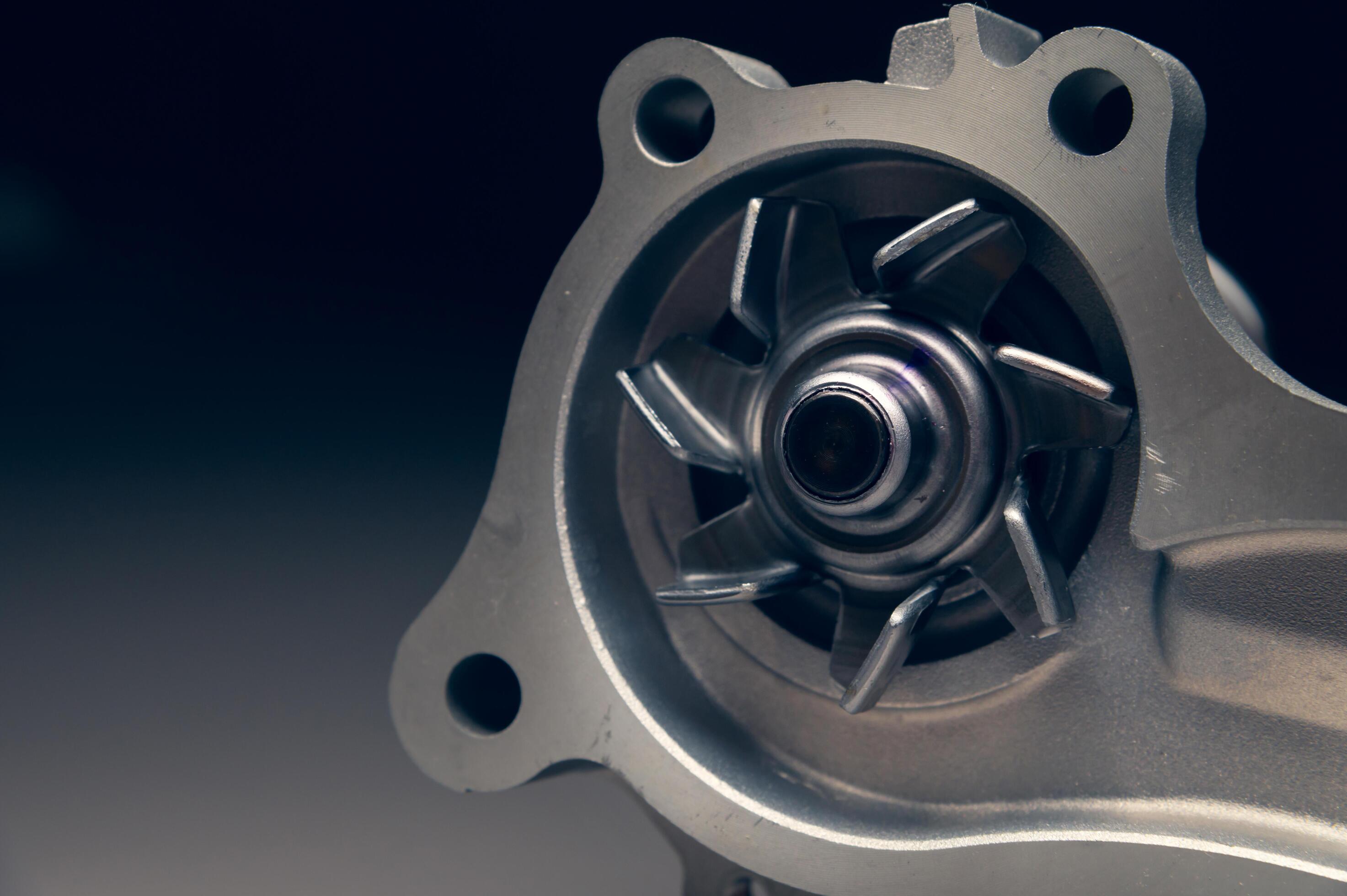
A temperature reading that climbs in traffic and settles on the highway has several possible causes. The fan, the coolant pump, the thermostat, the coolant's condition and a packed radiator face can each produce that pattern. A fan stuck on one speed produces the whole traffic-only complaint, so we watch it run through its speeds with the air conditioning on. The coolant pump on these engines is electric, and we confirm it turns at the speed it should. That separates a circulation problem from a fluid one. We read the stored fault record as well, and the cooling circuit is often in it.
Heat Cycles Age the Plastic and the Coolant
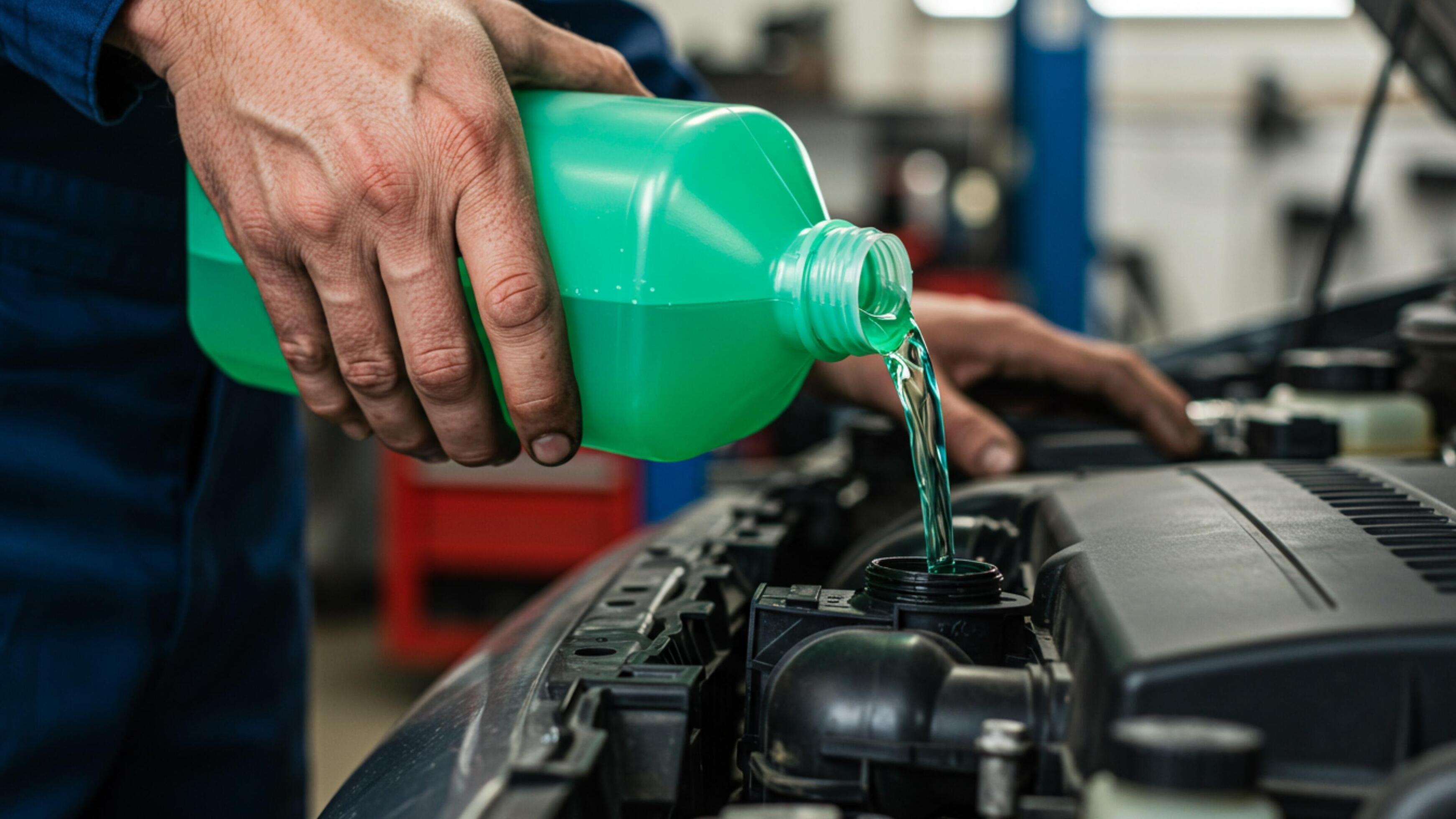
A lot of this cooling system is plastic, and plastic ages by heat cycles rather than by miles. Every drive warms those parts and every night cools them again, on the commuter and on the car that mostly sits. Plastic goes brittle over those years, and the coolant sitting inside it runs the same clock. The coolant's corrosion package thins out across that same heating and cooling, and coolant in that state carries heat a little less well. So a 12-year-old 3 Series with low miles isn't a low-risk car for this job. A flush renews the coolant when its age or condition calls for service, but it will not fix a weak fan, blocked airflow or another failed part. The air then gets bled out of the system, because a trapped pocket of air moves no heat at all.
Book the Check Before the Hot Week
You can bring one observation with you: whether the air comes back cold on the move, and how long that takes. The other is something you can look at tonight, straight through the grille at the face behind it. A hot week is when a thin margin shows, since at a standstill the fan is making all the airflow there is. Have the coolant's condition measured before those weeks arrive. If a part has already failed, the same readings show it.
Wanting cold air at a red light is a complete reason to book the check. You only need two details on the phone to Driven Auto Care of San Ramon at (925) 830-4701: the air goes warm at a stop, and it comes back on the move. We measure what the coolant has left, run the fan through its speeds with the air conditioning on, then look at the face behind the grille. Those three readings separate the fluid side of this from the airflow side. We do that work here in San Ramon, and the week to book it is the one before the heat arrives.