REVIEWS
You felt the pothole in your teeth, and now the Camry drifts to one side while the steering wheel sits a few degrees off-center. Maybe there's a new shimmy at highway speed on top of it. That off-center wheel and the steady pull are the first things you notice. A hard hit like that can do two different things at once, and they need two different fixes. Straightening that out for a Blackhawk Camry always starts at our San Ramon shop with a measurement, not an adjustment.
A Pothole Moves the Angles Out of Spec
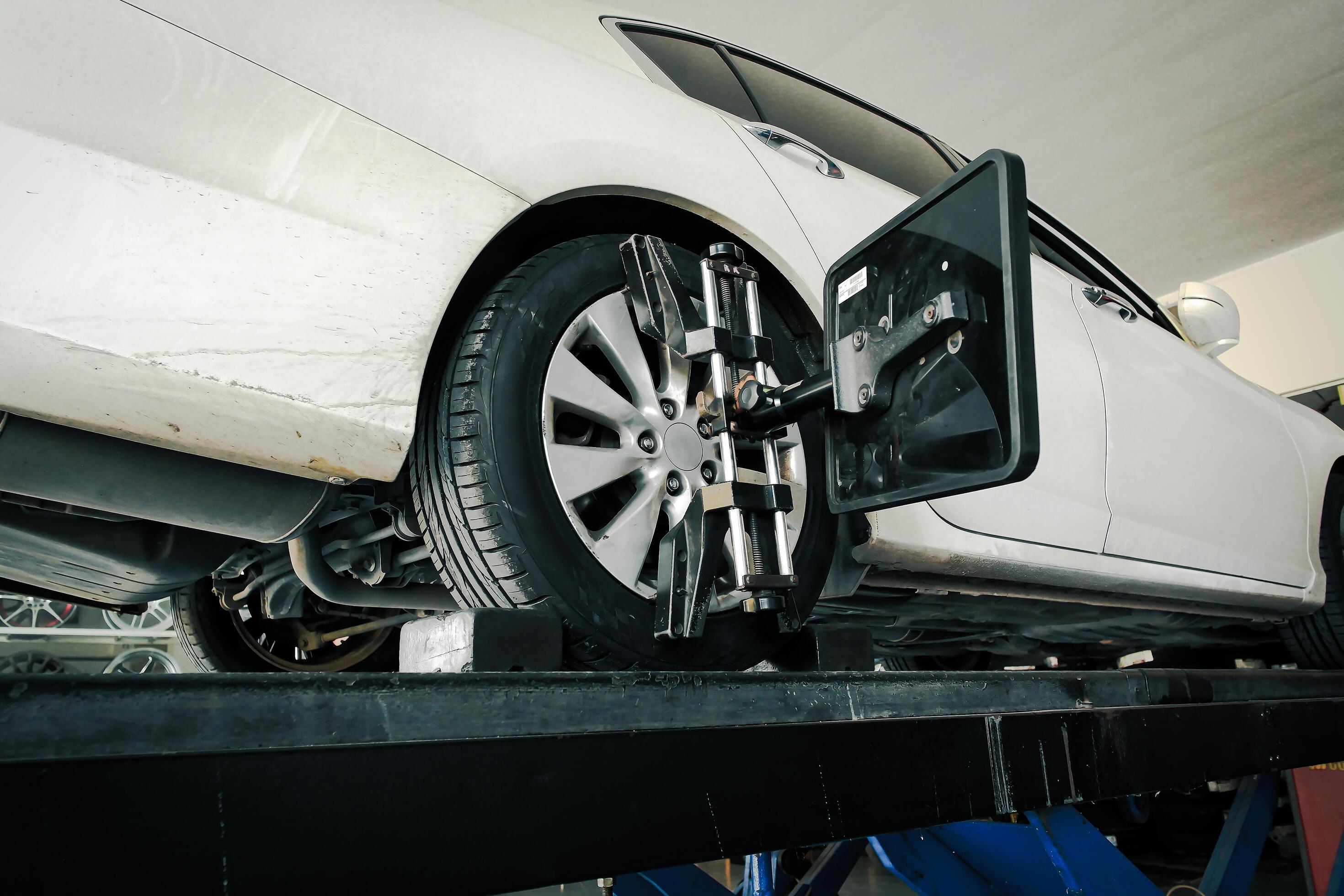
The most common result of a hard hit is a knocked alignment. The impact shoves a wheel, a tie rod, or a strut, and toe, camber, and caster shift out of the factory window, so the car tracks crooked and scrubs a tire on one edge. You can't judge toe by eye, so we put the Camry on a four-wheel alignment rack that reads each angle against Toyota spec. The printout shows exactly which angle moved and by how much, which is where a real diagnosis starts.
A Bent Part Can't Be Aligned True
A harder hit does more than move the numbers on the rack. A bent control arm, tie rod, or strut relocates the wheel at the metal level, so turning an adjuster can't compensate, and the part gets replaced before the alignment is set. On the lift we compare the left side to the right and look for a bend, a crack, or a torn bushing. When the readings come in wildly out or won't hold in spec, a bent part is the reason, and that's when we replace the part first, then align.
The Wheel and Tire Take the Same Hit
The wheel and tire absorb the same impact the suspension does. The rim edge can deform, and a bent rim develops runout that can't be balanced or set true, while an impact-damaged tire can bulge at the sidewall or lose belt integrity. Both of those show up as a vibration that gets blamed on the alignment. A shake that tracks road speed points to the wheel or tire, and a steady pull points to an alignment angle, so we road-test and check runout to tell them apart before we touch an adjuster.
Bounce, Nose-Dive, and Clunk Come From the Struts
A hard pothole can also damage a strut or its upper mount. Impact damage, a bent shaft, a blown seal, or a damaged mount lets the spring keep oscillating, so the car bounces after bumps, noses down hard under braking, and a worn mount clunks over bumps or groans in turns. A quick bounce test is the first check: push down on a corner and it should settle in about one rebound. We inspect for oil weep and mount damage and confirm the damper before selling struts, which are replaced in pairs.
Measure First, Then Adjust or Replace
All of this comes back to one sequence. When the angles adjust into spec and nothing reads bent, that's a straight alignment and it's all the car needs. When a locator or a wheel is bent, we replace the part first, because an alignment set on bent metal drifts right back out while your new tires wear unevenly within a few thousand miles. Measuring first is what keeps you from paying for the same pull twice.
Put It on the Rack Before Any Adjustment
So the order of operations matters more than anything else here. We measure the geometry against factory spec before we adjust a thing, and the rack shows us whether it's a simple alignment or a bent part. You know which one you have from the numbers, before any money is spent. Measure before you adjust, and call (925) 830-4701 so we can set the Camry on the rack and check every angle against factory spec first.