REVIEWS
Torque or tire, which one is shaking your TLX? You squeeze the throttle up a Danville on-ramp, and a shudder climbs through the floor. Ease off, and it clears the moment the load comes off the powertrain. A shake that lives under load behaves differently from one tied to how fast the wheels happen to be turning. We read that behavior first, because the answer splits the diagnosis in two before we touch a single bolt.
Load Versus Coast Is the Whole Test
Drivers reach for a balance shop the moment a TLX shakes, yet the cheapest test of all happens on a quiet test drive. We bring the car to a steady speed, hold light throttle to keep mild load, then ease into a coast at that same speed and feel for the change. A driveline vibration follows engine torque, so it grows under power and fades on the overrun. Anything tied to the wheels stays locked to road speed and ignores the throttle entirely, holding through the whole coast. That clean split decides a great deal before anyone touches a lug nut, and it costs nothing but a few minutes of careful driving.
The Inner CV Joint Binds Only Under Power
Many transverse front axles run a tripod-style inner joint, where rollers ride in a housing that lets the shaft telescope as the suspension travels. When a roller groove wears, that joint can bind and release as torque loads it, and a fore-aft shudder shows up on power. Lift the throttle and the binding unloads, which is why coasting smooths things back out. A torn boot makes the wear worse, because slung grease invites grit that chews the rollers from inside. So we turn each axle by hand to feel for notchy spots, then read the boot before we write off the joint.
A Soft Transverse Mount Lets the Powertrain Rock
The engine sits sideways in a TLX, so it tries to twist about the crank axis every time you launch. Mounts hold that twist in check, and a hydraulic mount uses fluid inside to soak up the motion. A collapsed or leaking mount lets the powertrain rock too far and thumps a shudder into the body under throttle, and the torque mount low on the engine tends to give out first. We run a controlled snap-load against the brake, watch how far the engine jumps, then pry gently and look for fluid weeping at the seams. When a mount holds firm and stays dry, we cross it off the suspect list.
On SH-AWD the Driveshaft Joins the Suspects
Super Handling All-Wheel Drive widens the search, because the rear driveline can feed a vibration of its own into the cabin floor. The suspect list now reaches past the front axles, so the next job is to isolate front from rear. We check the propeller shaft and its center support bearing for play and roughness by hand, then feel each joint along the shaft for a worn spot. A whine that climbs with load tells a different story than a shudder that tracks the throttle. Reading those two signals apart keeps a sound front axle on the car where it belongs.
When the Wheel Wins the Blame, We Road-Force Balance
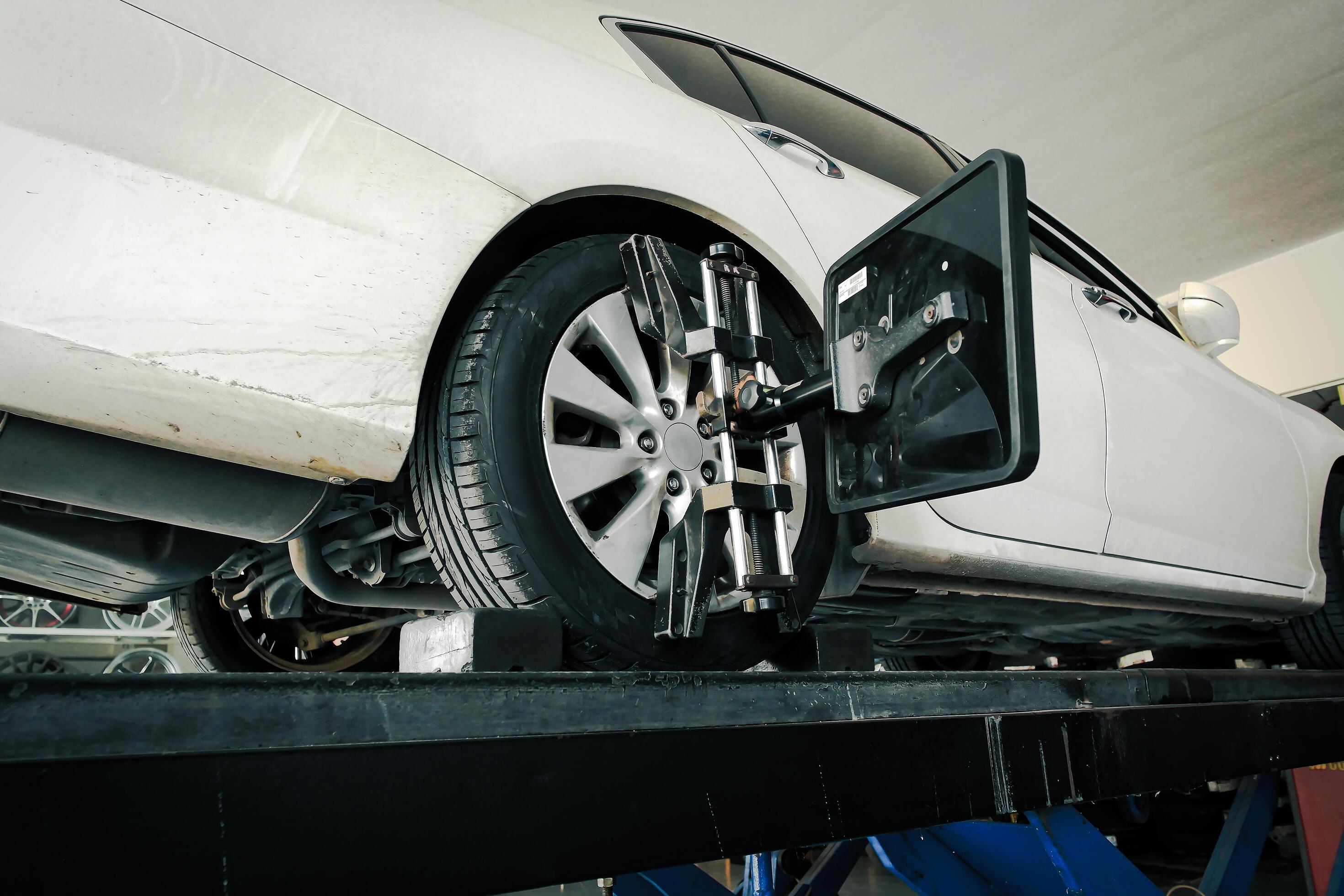
A plain spin balance corrects weight distribution, and weight is all that it corrects. It misses radial force variation, where a stiff spot in the tire pushes harder once the car’s full weight rolls over it, and it can’t see a bent rim. On a road-force balancer, a loaded roller presses against the spinning tire to mimic the road and finds that hidden stiff spot. A dial indicator against the hub then reads runout, so a warped rim or a dirty hub face stops hiding behind the tire. Ignore that shudder and the binding joint or stiff tire only widens the damage, so call (925) 830-4701 when your TLX shakes onto a Danville on-ramp and Driven Auto Care of San Ramon will pin it to torque or to road speed.