REVIEWS
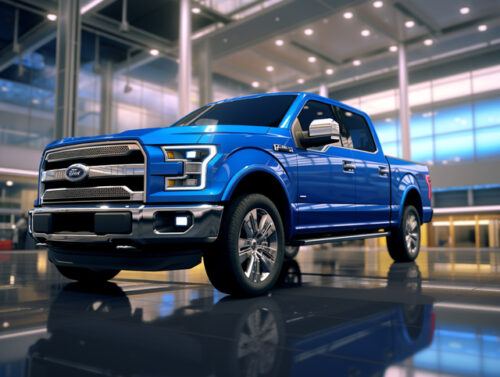
There is no one perfect mileage number for replacing Ford F-150 struts. The right time is when wear starts affecting control, braking, tire contact, or stability. At Driven Auto Care in San Ramon, CA, we often see this on trucks used for towing, hauling, or heavy daily driving. Our Ford service page already lists suspension wear among common F-150 concerns, and our San Ramon shop serves East Bay drivers with free inspections and diagnostics, digital inspections, and a 3-year, 36,000-mile warranty.
The clearest answer is this: replace the struts when safety symptoms begin, not when the ride becomes annoying. Ford’s own shock and strut service guidance states that common warning signs include frequent bouncing, reduced tire grip, excessive tire wear, decreased handling or braking, vibration or noise, and fluid leaking from shock or strut components. Ford also says if those symptoms appear, the vehicle should be inspected immediately. That tells you the issue is not just about comfort. It is about road control.
On an F-150, one of the first clues is a bouncy or unsettled front end. If the truck keeps moving after a bump instead of settling quickly, the struts are no longer controlling suspension motion the way they should. Monroe says worn shocks and struts can also cause nose-dive during braking and vehicle sway in corners, both of which can increase stopping distance and make the vehicle feel less stable. On a full-size truck, especially one carrying cargo or pulling weight, those changes matter more than they would on a lighter car.
You should also pay attention to tire wear and steering feel. Ford lists excessive tire wear as a warning sign, and Monroe explains why: when struts wear out, the vehicle can bounce more, reducing road-holding force and potentially causing cupping or scalloping on the tires. If your F-150 starts wandering, requires more steering correction, or feels loose on rough pavement, the suspension may no longer be keeping the tires planted as it should. That is where a wear problem turns into a confidence problem, then into a safety problem.
Leaks and noise are another big dividing line. Firestone notes that fluid leaks around the shock or strut housing are one of the quickest visual signs of failure, because the hydraulic fluid inside helps dampen road impact. Ford also lists fluid leaks, damage, vibration, and noises as reasons to have the suspension checked right away. If your F-150 clunks over bumps, dips harder under braking, or shows oily residue near the strut area, waiting longer usually does not make the repair smaller. It usually gives tire wear, handling problems, and related suspension wear more time to build.
At Driven Auto Care of San Ramon, CA, we replace Ford F-150 struts when inspection shows they are affecting safe operation, not because of guesswork. We road-test the truck, inspect for leaks, check for mount wear, assess spring condition and related suspension problems, and check alignment needs, too. Our recent San Ramon suspension content explains that worn links, mounts, control arms, and tie rods can mimic strut symptoms, which is exactly why proper diagnosis matters before parts are replaced. If your F-150 feels bouncy, unstable, noisy, or less confident under braking, call us at (925) 830-4701 and let us help you restore safe, steady control.